
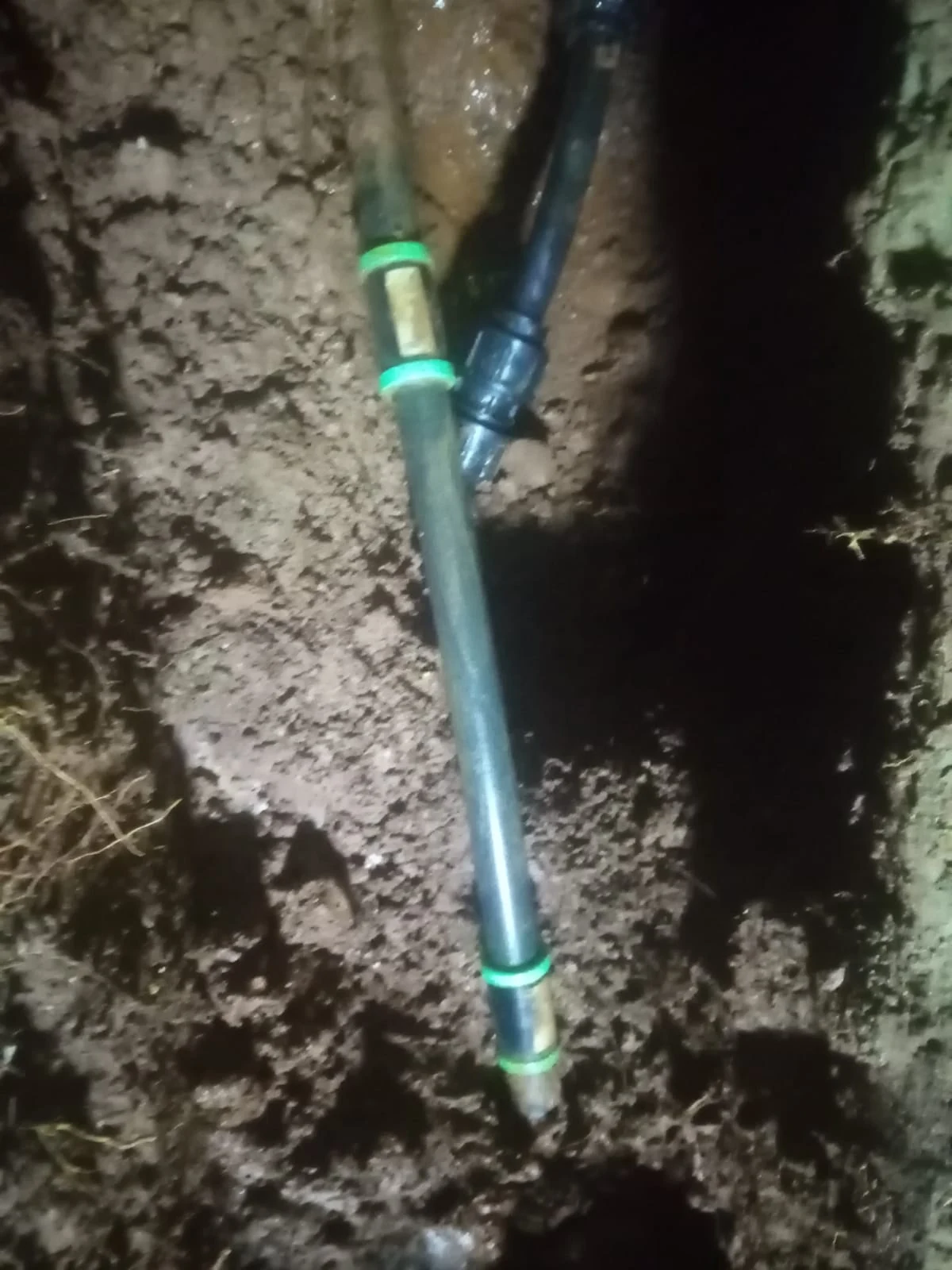
When water escapes through a crack or failed fitting under pressure, it can create sound and vibration. Acoustic leak detection uses sensitive equipment to listen for that signal and compare it across likely pipe routes.
How a leaking pipe creates sound
Water forced through a small opening may produce hissing, rushing or vibration. The signal travels through the pipe, surrounding soil and building materials, changing as it moves.
Ground microphones and listening sensors
Technicians place sensors at selected points over floors, paving or soil. They compare sound intensity and frequency while reducing background interference.
Contact microphones
Sensors can be attached to valves, taps or exposed pipework. Because sound travels along the pipe wall, contact points can help indicate which section carries the strongest leak signal.
Leak correlators
Correlators use two sensors placed on a pipe network and calculate the likely leak position from the time difference between signals. Accurate pipe material, diameter and route information improves the result.
Why plastic pipes can be harder to test
Plastic tends to transmit less high-frequency sound than metal. Low pressure, deep burial and soft soil can further weaken the signal, so other methods may be needed.
Background noise and false signals
Traffic, pumps, appliances, flowing drains and neighbouring plumbing can interfere. Testing during quieter periods and repeating measurements helps distinguish a leak from environmental noise.
When acoustic detection works best
It is particularly useful for pressurised supply pipes with a continuous leak and a reasonably known route. It is less effective for unpressurised waste pipes or leaks that occur only occasionally.
Confirming the suspected location
The loudest point is not automatically the leak. Technicians compare readings, isolate sections and may use pressure, moisture or thermal tests before recommending access.
What property owners can do
Provide plans if available, explain when the problem began and turn off noisy equipment during testing. Do not drill or excavate based only on a sound heard without professional confirmation.
Frequently asked questions
Can acoustic equipment hear a leak through concrete?
Often, yes, but slab thickness, reinforcement, pipe depth and surrounding materials affect the signal.
Does a quiet leak mean there is no problem?
No. Small, low-pressure or plastic-pipe leaks may produce weak acoustic evidence.
Is acoustic detection suitable for drain leaks?
It is mainly used for pressurised water pipes. Drain and sewer leaks usually require different testing methods.
Need a concealed leak located?
Share the pipe location, meter behaviour and affected areas so we can help determine whether acoustic testing is appropriate.