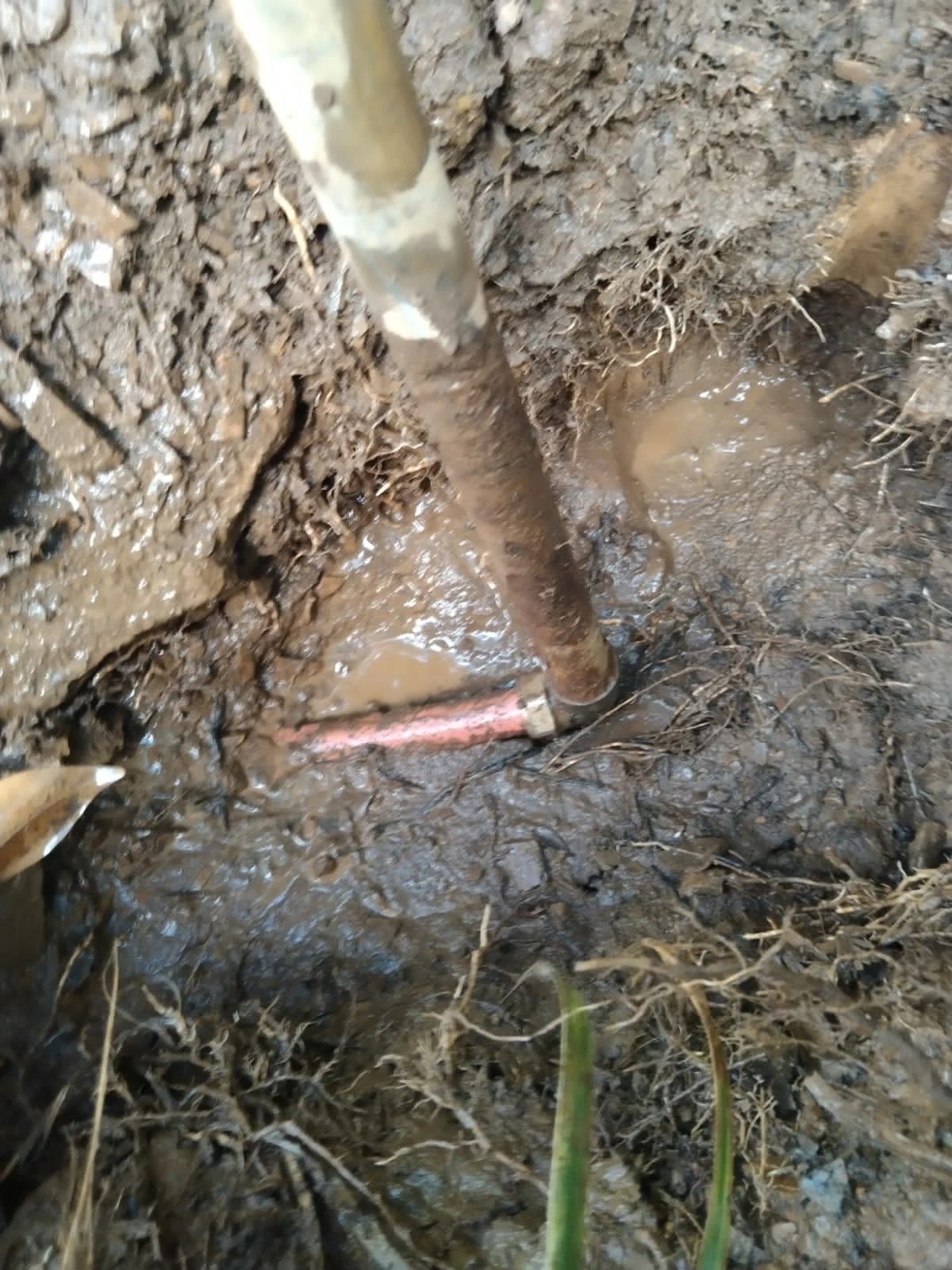
When a supply pipe, tap connector, toilet feed or appliance hose fails, closing the main water supply is often the fastest way to limit damage. The important part is knowing which valve to use, how to operate it safely and when not to force it.
Quick action checklist
- Protect people from water, sewage, heat and electricity.
- Isolate the relevant water supply when safe.
- Stop using affected fixtures and appliances.
- Limit damage without attempting unsafe repairs.
- Take photographs and give the plumber clear information.
Why the main valve matters
The main shut-off valve controls the incoming water supply to the property. Closing it does not repair the fault, but it can stop or greatly reduce fresh water feeding a burst pipe or failed fitting while professional help is arranged.
First decide whether shutting off the water is appropriate
Close the main supply when clean water is flowing continuously from a pipe, fitting, tap, toilet feed, washing-machine hose or similar pressurised line. A blocked drain or sewer backup is different: stop using connected fixtures, because closing the incoming supply will not remove wastewater already in the drainage system.
Where to look for the main shut-off valve
Common locations include the municipal water-meter box near the boundary, an outside wall where the supply enters the building, a garage, a utility area or a service duct. In sectional-title or commercial properties, the valve may serve several units, so contact the trustee, caretaker or facilities manager before isolating a shared supply.
How to close the valve safely
Use a torch if visibility is poor. Clear loose objects and make sure the ground is stable. A wheel-style gate valve normally closes by turning clockwise. A lever-style ball valve is usually closed when the handle sits across the pipe. Turn steadily and stop when resistance becomes firm; do not use excessive force.
Confirm that the water has stopped
Open a cold tap at a low point in the property for a few seconds. The flow should reduce and stop as pressure leaves the line. Some residual water may still drain from upstairs pipes or a storage tank. If water continues at full pressure, the wrong valve may have been closed or the valve may have failed internally.
What to do if the valve is stuck, damaged or buried
Do not strike the valve, attach a long extension for leverage or force brittle fittings. A seized valve can snap and create a larger leak. If the meter box is flooded, contains exposed wiring, is unsafe to access or requires a municipal tool, step back and request professional or municipal assistance.
What happens to the geyser and appliances
When the property water is isolated, avoid using washing machines, dishwashers and water-fed appliances. If the emergency involves the geyser or hot-water line, switch off the geyser circuit at the distribution board only when it is safe to reach. Do not walk through water to reach electrical equipment.
Before turning the water back on
The damaged section should be repaired or safely isolated first. Reopen the main valve slowly while someone watches the repair area. Sudden pressure can stress fittings and create water hammer. Check the repaired pipe, nearby joints, toilets, taps and appliances for leaks before normal use resumes.
Prepare before an emergency
Ask a plumber to identify and label the main valve, unit isolation valves and geyser circuit. Test accessible valves periodically without forcing them. Keep the meter box visible and free of soil or vegetation, and save the emergency contact number where occupants can find it.
Frequently asked questions
Which direction closes a water valve?
Most wheel-style valves close clockwise. Lever ball valves are normally closed when the handle is perpendicular to the pipe.
Will closing the main water stop a geyser leak?
It can stop fresh water feeding the geyser, but stored hot water may still escape. Isolate the geyser circuit safely and request urgent assistance.
Can I close the municipal meter valve myself?
Access rules differ by municipality and property type. Do not damage seals or use force. Contact the municipality or a plumber when access is restricted.
Why is water still running after I close the valve?
Water may be draining from pipework or a tank. Full-pressure flow suggests the wrong valve was used or the valve is not closing properly.
Need an emergency plumber now?
Tell us what has happened, send photographs if possible and let our team help you arrange the right response.