
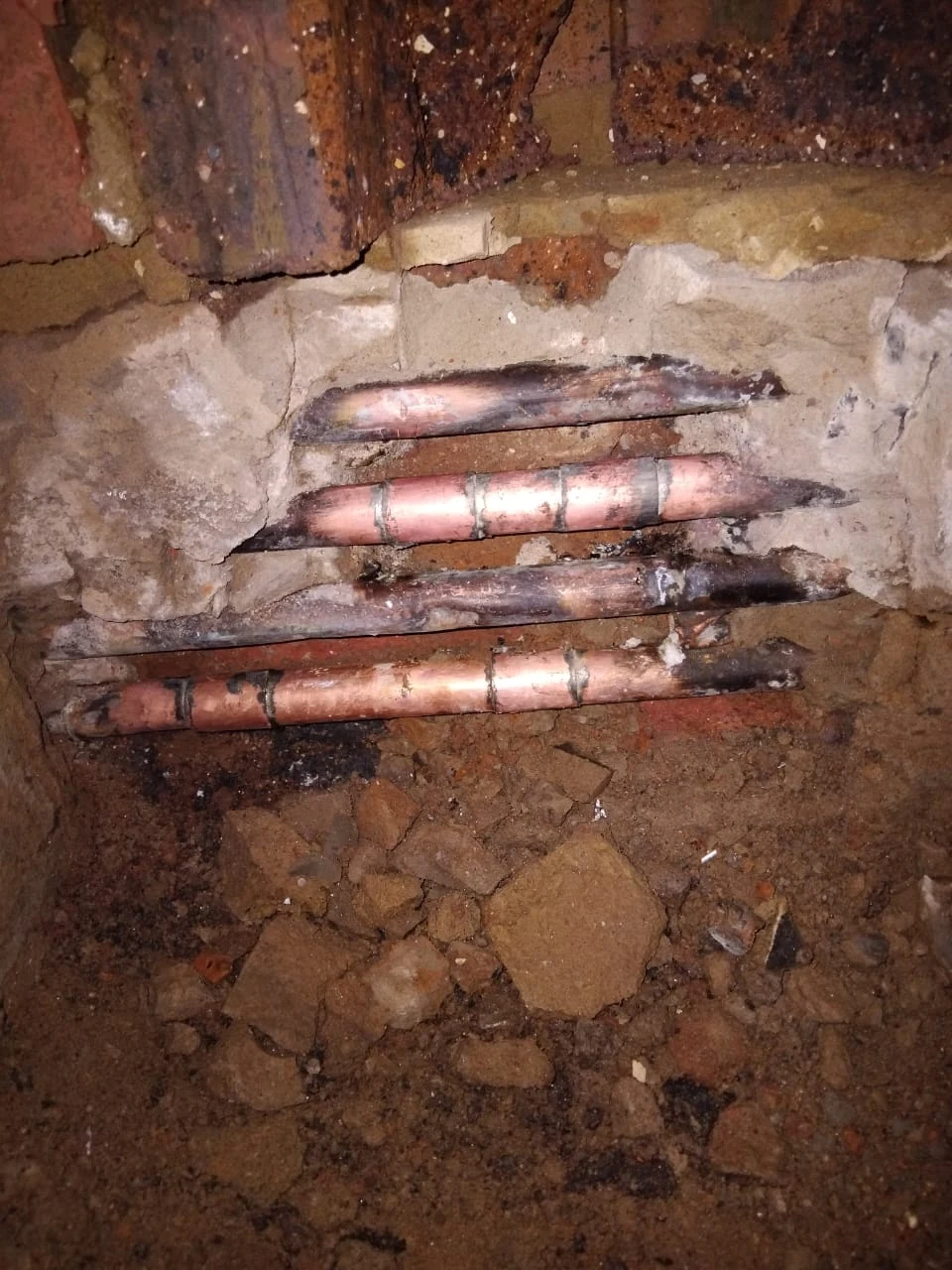
A burst pipe is not always visible. Water may escape behind a wall, beneath a floor, above a ceiling or underground. The leak can continue for days while the first visible clue appears far from the damaged pipe.
Unexplained movement on the water meter
Turn off taps and water-using appliances, then observe the meter. Continued movement can indicate hidden consumption, although toilets, irrigation and appliances must also be ruled out.
A sudden increase in the municipal bill
An unusual rise in usage without a matching change in household activity is a strong reason to investigate. Compare several billing periods and check whether the meter reading is estimated or actual.
Damp patches, stains and bubbling paint
Water behind finishes may cause dark patches, peeling paint, swollen skirtings, lifting tiles or powdery deposits. The visible mark may be below or beside the actual leak point.
Mould or persistent musty smells
Moist enclosed spaces encourage mould and microbial growth. A recurring smell after cleaning may indicate that moisture is still entering the wall, floor or ceiling.
Reduced water pressure
A significant pipe opening can divert enough water to reduce pressure at taps and showers. Pressure loss may also have municipal or valve-related causes, so the system must be tested.
The sound of running water
Hissing, trickling or rushing sounds when no fixture is operating can point to a concealed leak. Listen near service ducts, walls, floors and the main supply route.
Warm floors or hot spots
A concealed hot-water leak may warm a floor or wall and cause the geyser to heat more often. Thermal imaging can help locate temperature differences, but findings must be confirmed.
Cracks, lifting floors and soil washout
Long-running leaks can soften soil, damage screeds and affect finishes. These signs require prompt investigation because the cost extends beyond the pipe repair.
What to do when you suspect a hidden burst
Record the meter, isolate sections where possible and contact a plumber or leak-detection specialist. Avoid opening walls at random; targeted testing reduces unnecessary damage.
Frequently asked questions
Can a hidden burst pipe stop leaking on its own? Pressure changes may make the leak appear intermittent, but the damaged pipe does not repair itself.
Will insurance pay for leak detection? Policies differ. Contact the insurer promptly and keep reports, photographs and invoices.
Can a plumber find the leak without breaking walls? Often the likely area can be narrowed using non-destructive methods, but some access may still be needed to confirm and repair the pipe.
Need help with a burst pipe?
Tell us what has happened, send photographs if possible and let our team help you arrange the right response.