
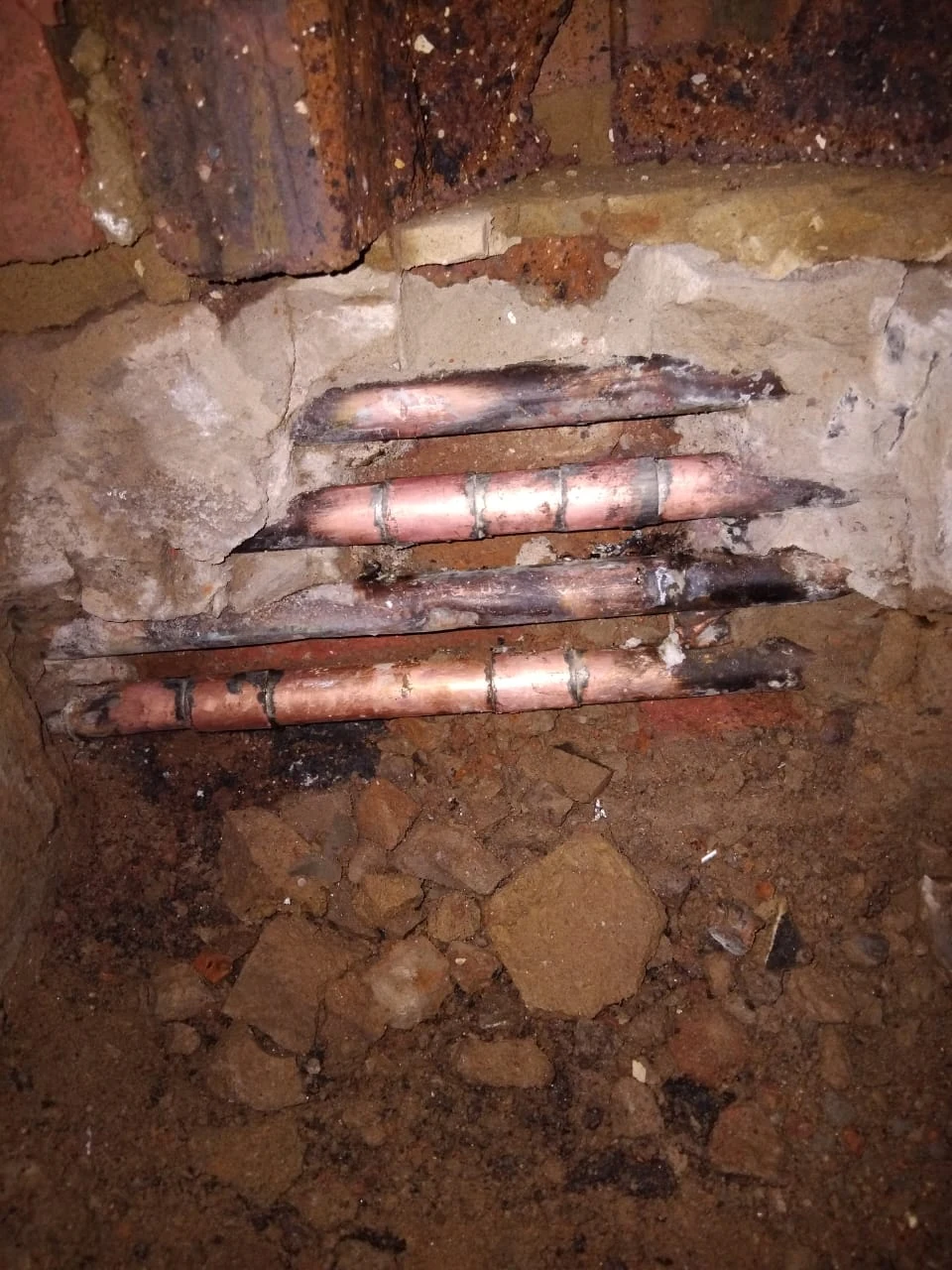
Pipes rarely burst without an underlying reason. Even when the failure appears sudden, the pipe may have been weakened over months or years by corrosion, excessive pressure, movement, heat, poor support or a damaged joint. Finding the cause matters because repairing only the visible split may leave the same risk elsewhere in the system.
The most common reasons pipes burst
A burst pipe is any pipe or fitting that can no longer contain normal system pressure. The opening may be a clean split, a pinhole that rapidly enlarges, a failed fitting or a joint that pulls apart.
- Internal corrosion that thins metal pipe walls.
- Water pressure that repeatedly exceeds the system design.
- Poorly made, unsupported or stressed joints.
- Accidental drilling, impact or construction damage.
- Thermal movement and expansion in hot-water pipework.
- Ageing flexible connectors, valves and fittings.
High water pressure and pressure surges
Excessive static pressure puts continuous strain on pipe walls, valves and connectors. Sudden surges caused by fast-closing valves, pumps or municipal supply changes can create a water-hammer effect that weakens fittings and joints.
- Banging noises when taps or appliances close.
- Frequent leaks at different fixtures.
- Short life of mixers, valves or flexible hoses.
Corrosion and ageing pipework
Copper and galvanised pipes can corrode from water chemistry, age, dissimilar metals or external moisture. Once the wall becomes thin, an apparently small defect may open under ordinary pressure.
- Green or blue staining around copper.
- Brown water or rusty fittings.
- Recurring pinhole leaks in the same installation.
Poor installation and unsupported pipes
Pipes need suitable clips, correct joint preparation and space for movement. A pipe installed under tension may pull against a fitting, while long unsupported runs can flex and vibrate until a joint fails.
Temperature changes and hot-water expansion
Hot-water pipes expand as they warm and contract as they cool. Where pipework is trapped tightly in walls, floors or clips, repeated movement can fatigue joints and fittings.
- Hot-water leaks that recur near elbows or couplings.
- Cracking or ticking sounds as pipes heat up.
- Damage concentrated around the geyser or hot-water line.
Accidental and building-related damage
Drilling into concealed pipes, renovation work, ground movement and structural settlement can all damage pipework. In some cases the pipe is nicked but does not fail until pressure and corrosion enlarge the damage.
- Leaks that begin after renovations.
- Dampness near a recently drilled wall.
- Failures beneath driveways, paving or foundations.
How a plumber identifies the real cause
A proper assessment considers the pipe material, age, pressure, leak pattern and surrounding conditions. The plumber may test pressure, inspect accessible pipework, use acoustic or thermal equipment and examine the failed section after removal.
When one burst suggests a wider problem
A single isolated failure may be repairable. Repeated leaks, widespread corrosion, consistently high pressure or multiple failed joints may justify replacing a longer section or correcting the system pressure rather than continuing with patch repairs.
Frequently asked questions
Can cold weather burst pipes in South Africa? Severe cold is less common than in colder countries, but exposed pipework can still be affected in high-altitude or unusually cold areas. Pressure, corrosion and installation faults are more frequent local causes.
Can a new pipe burst? Yes. New pipework can fail because of incorrect fittings, poor jointing, excessive pressure, accidental damage or unsuitable materials.
Does a burst always mean the pipe is old? No. Age increases risk, but pressure surges, impact and installation defects can cause newer systems to fail.
Need help with a burst pipe?
Tell us what has happened, send photographs if possible and let our team help you arrange the right response.