
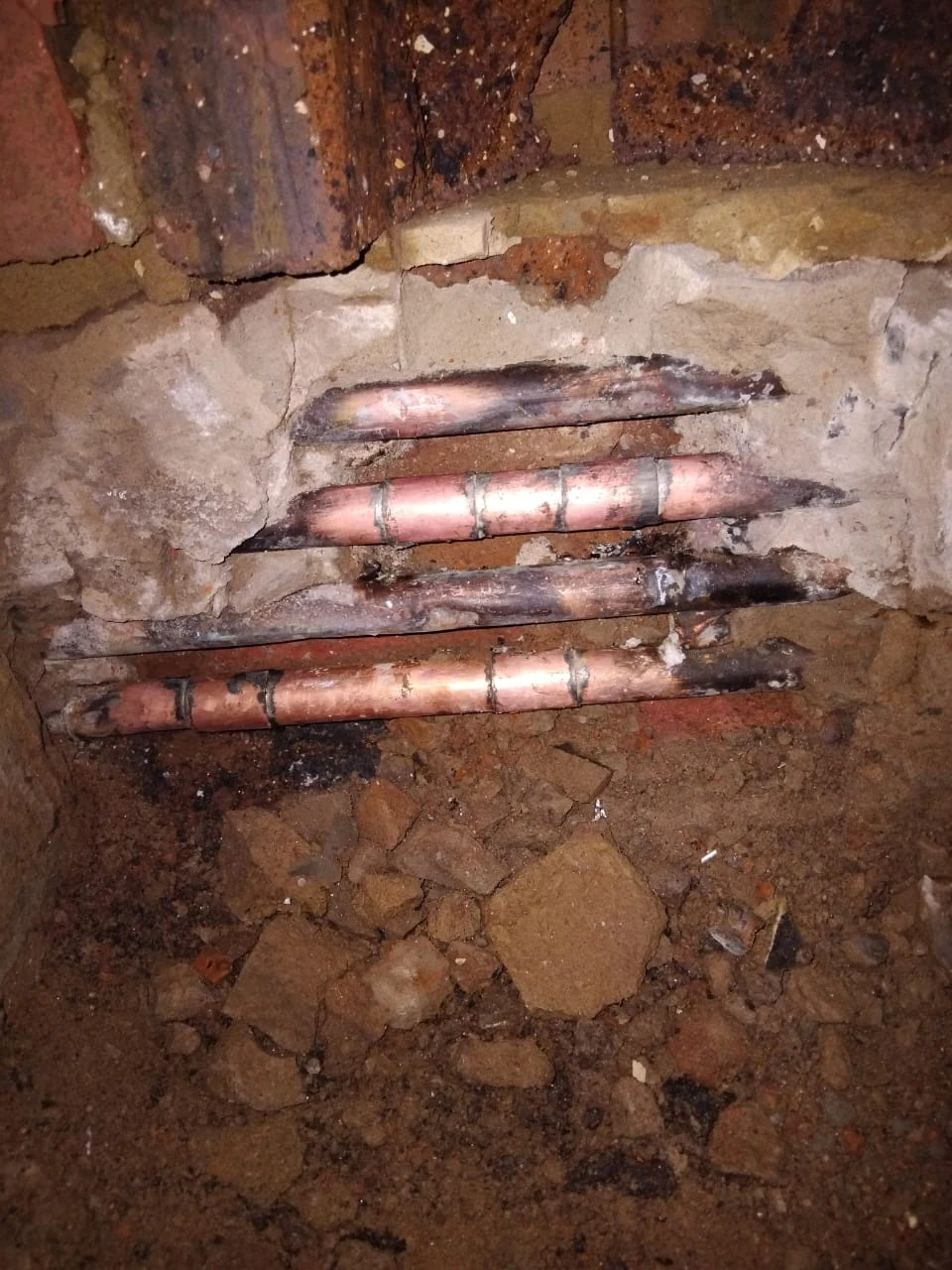
A single damaged fitting does not mean an entire plumbing system must be replaced. Repeated bursts, widespread corrosion and inaccessible failing pipework can, however, make continued patch repairs more expensive and disruptive than planned replacement.
Repeated leaks in the same system
Several failures in a short period suggest that the remaining pipe may share the same age, corrosion or installation weakness.
Widespread corrosion
Green-blue deposits, rusty water, pitting and thin pipe walls indicate deterioration beyond one isolated hole. Removed sections provide useful evidence of the internal condition.
Obsolete or unsuitable materials
Some older or incorrectly used materials may be difficult to repair reliably, incompatible with current fittings or unsuitable for the temperature and pressure involved.
High access and reinstatement costs
When each leak requires opening expensive tiles, ceilings or built-in cupboards, replacing the vulnerable run during one planned project may reduce future damage.
Pressure and system design problems
Replacement should address the cause. New pipework can fail if excessive pressure, poor support, thermal expansion or water hammer remain unresolved.
Local repair versus partial replacement
A plumber may replace only the affected branch, hot-water run, underground supply or heavily corroded section rather than repiping the entire property.
Planning the replacement route
Alternative routes through ceilings, ducts or external walls may reduce demolition. The design should consider accessibility, insulation, supports and isolation valves.
Choosing suitable materials
Material selection depends on water temperature, pressure, location, exposure, local practice and compatible fittings—not simply the lowest price.
Testing and documenting the new installation
Completed work should be pressure-tested, checked under operating conditions and photographed before concealed areas are closed.
Frequently asked questions
How many leaks mean replacement is necessary? There is no fixed number. Frequency, pipe condition, cause and repair access all matter.
Can I replace pipes in stages? Yes. A risk-based plan can prioritise the most vulnerable or disruptive sections.
Does replacing pipes increase property value? Reliable modern plumbing may improve buyer confidence, but value depends on the quality and documentation of the work.
Need help with a burst pipe?
Tell us what has happened, send photographs if possible and let our team help you arrange the right response.