
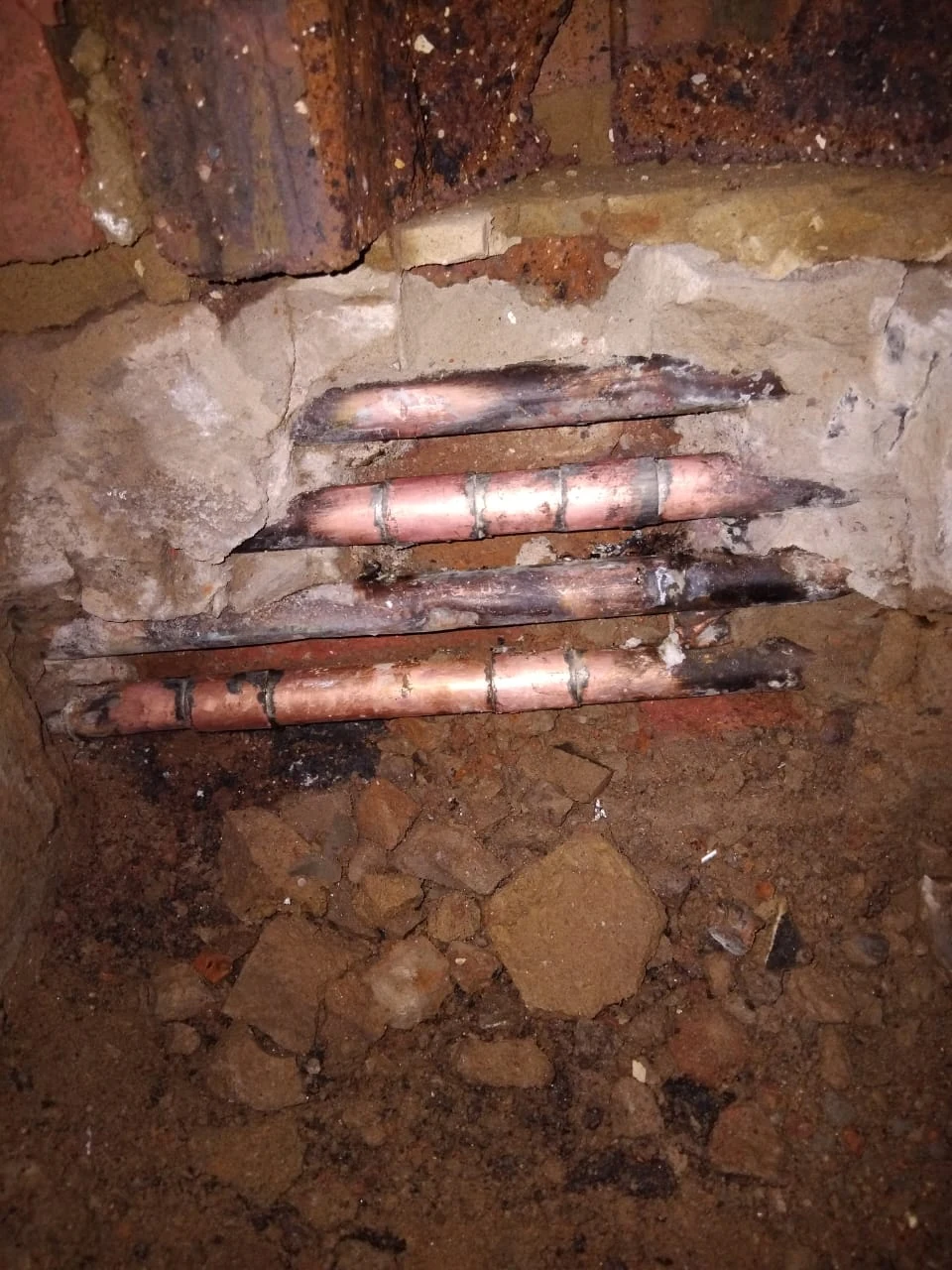
Copper and plastic pipe systems can both provide reliable service when correctly selected and installed. Their failure patterns differ, however. Copper is vulnerable to corrosion and thinning, while PVC and other plastics are more often affected by unsuitable temperature, poor joints, impact, ultraviolet exposure or incompatible fittings.
How copper pipes commonly fail
Copper may develop pinhole leaks, split at weakened sections or fail near soldered and compression joints.
- Internal pitting and water-chemistry corrosion.
- External corrosion from damp materials.
- Stress near bends and rigid supports.
- Poor soldering or incompatible metal contact.
How PVC and plastic pipes commonly fail
Plastic pipes may crack, pull out of fittings, deform under heat or fail where solvent welds and mechanical joints were poorly prepared.
- Incorrect pipe type for hot water or pressure.
- Brittleness from age or ultraviolet exposure.
- Insufficient insertion into fittings.
- Impact or stress at unsupported sections.
Temperature and hot-water suitability
Standard PVC is generally not appropriate for hot-water supply. Other plastic systems may be designed for higher temperatures, but only when installed with compatible fittings and manufacturer-approved methods.
Pressure and water hammer
Both copper and plastic systems can fail under excessive pressure. Plastic may absorb some vibration differently, but joints, valves and connectors remain vulnerable to surges.
Warning signs in copper systems
Look for green-blue deposits, repeated pinholes, staining around joints and sections that feel thin or pitted after removal.
Warning signs in plastic systems
Look for cracked fittings, movement at joints, distorted pipe, discolouration, loose supports and leaks after temperature or pressure changes.
Repair differences
Copper repairs may involve cutting and joining with approved fittings. Plastic repairs require correct identification of the material because PVC, CPVC, HDPE, PEX and multilayer systems use different joining methods.
When mixed materials create problems
Joining copper to other metals or plastics requires suitable transition fittings and attention to movement, support and galvanic corrosion.
Which material lasts longer
Service life depends less on a simple material ranking and more on water chemistry, pressure, temperature, workmanship and environment.
Frequently asked questions
Is copper always better than plastic? No. Each has appropriate applications and installation requirements.
Can PVC be used for a geyser line? Standard PVC should not be used where temperatures exceed its rating. The correct hot-water-rated system must be selected.
Should one failed section be replaced with a different material? Only with an approved transition and a clear reason. Random material changes can create future maintenance problems.
Need help with a burst pipe?
Tell us what has happened, send photographs if possible and let our team help you arrange the right response.