
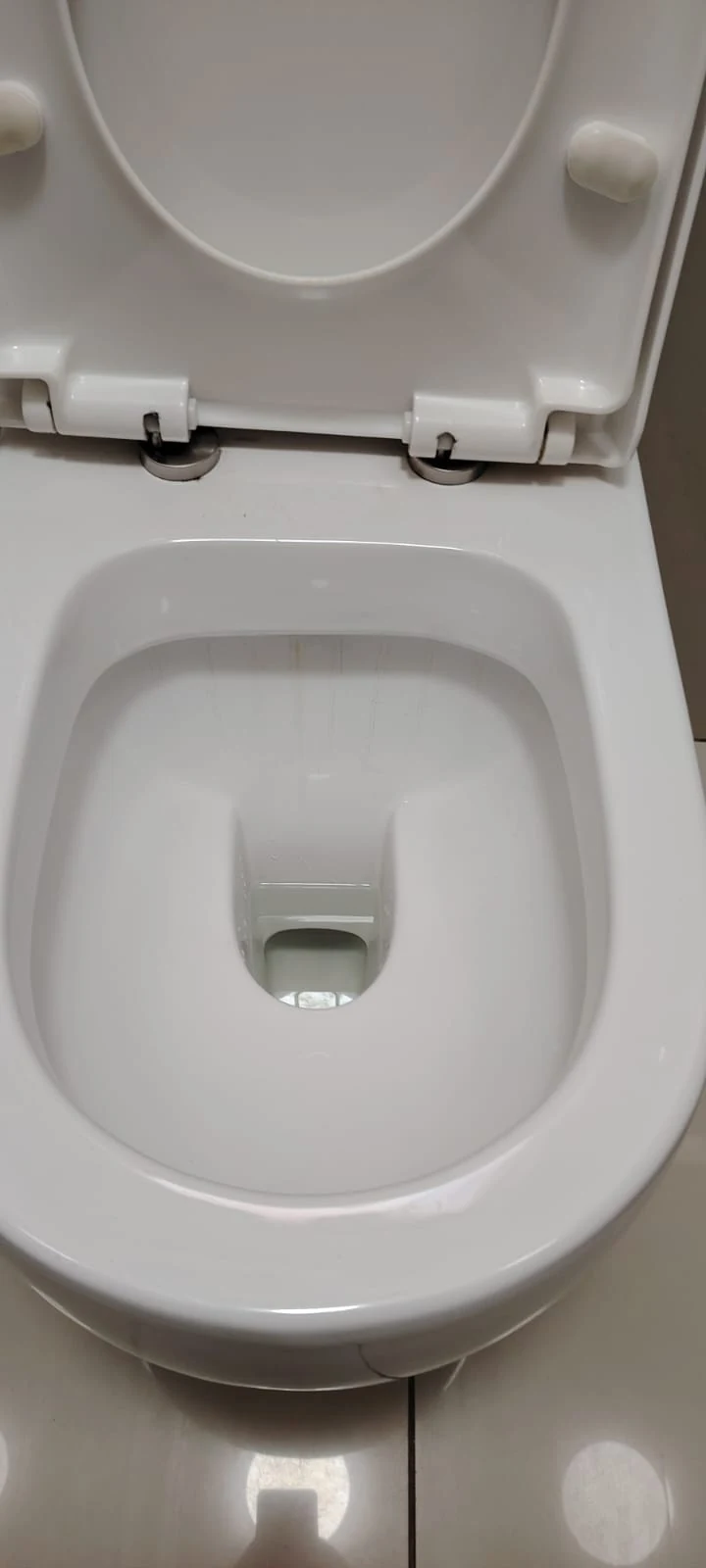
The cistern controls how a toilet fills, stores water and releases the flush. Small parts inside it work repeatedly every day, so seals, valves, floats and button linkages eventually wear. Correct diagnosis prevents unnecessary replacement and ensures the repaired toilet fills and stops reliably.
Before you worry
Many cistern faults are repairable without replacing the entire toilet. The important questions are whether the cistern fills, whether water runs into the pan, and whether the flush mechanism operates fully.
How to recognise the problem
- The cistern fills slowly or not at all.
- Water continuously enters the pan.
- The button sticks, feels loose or does nothing.
- The cistern overflows or refills intermittently.
- Water leaks from cistern bolts or connections.
Common causes
- Worn inlet or flush valve seals.
- Incorrect float adjustment.
- Broken button, lever or cable linkage.
- Scale and debris inside a valve.
- Cracked plastic components or perished cistern washers.
What you can safely check yourself
- Turn the isolation valve gently if water is running continuously.
- Observe which component is leaking or sticking.
- Take a photo before moving any adjustable parts.
- Check the toilet make and model where visible.
- Keep loose cistern lids on a safe flat surface.
What you should never do
- Do not force brittle plastic mechanisms.
- Do not overtighten cistern bolts.
- Do not mix incompatible replacement components.
- Do not work inside a concealed cistern without proper access.
When to call a plumber
Call a plumber when the isolation valve leaks, the cistern is concealed, components are cracked, water reaches electrical areas, or repeated adjustments do not stop the fault.
How professionals solve it
A plumber isolates the water, tests the inlet and flush assemblies, checks the overflow and confirms compatibility of replacement parts. Seals or mechanisms are repaired or replaced, the water level is set correctly and repeated flush tests confirm reliable shut-off and no leakage.
How to prevent it happening again
- Repair small leaks before scale damages more components.
- Avoid in-cistern cleaning blocks that attack rubber seals.
- Operate buttons gently.
- Keep concealed-cistern access panels available.
- Replace ageing mechanisms with serviceable, compatible parts.
Frequently asked questions
Can every cistern be repaired?
Most can, but obsolete or badly cracked mechanisms may be more practical to replace. Concealed units require compatible parts and proper access.
Why does my cistern take so long to fill?
The inlet valve may be restricted, worn or affected by low supply pressure, or the isolation valve may not be fully open.
Should both cistern bolts be replaced together?
When one washer or bolt has deteriorated, replacing the set often gives a more reliable seal and balanced fixing.
Need help with a toilet cistern fault?
Tell us whether the cistern runs, fills slowly, leaks, overflows or fails to flush so we can identify the likely mechanism.