
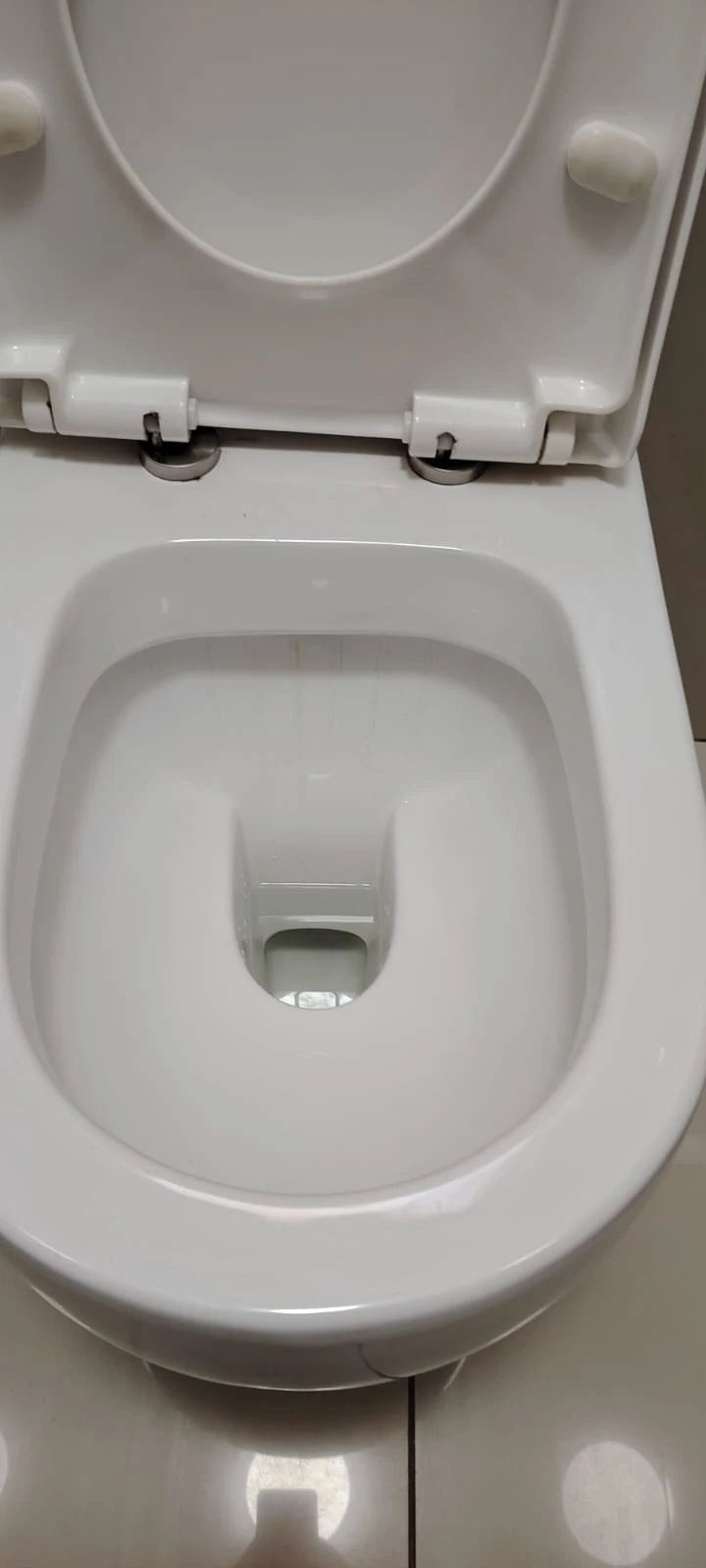
A weak toilet flush can leave paper or waste behind, require repeated flushing and waste more water than a correctly operating system. The cause may be low cistern water level, restricted rim jets, an incorrect flush setting, a worn mechanism or a developing blockage.
Before you worry
One poor flush after an unusually heavy use does not necessarily indicate a defect. Repeated weak flushing, especially when the cistern appears full, deserves attention because it may be mechanical or drainage-related.
How to recognise the problem
- The flush starts normally but loses force quickly.
- Paper remains after flushing.
- More than one flush is regularly required.
- Water enters the pan unevenly around the rim.
- The pan water rises before draining slowly.
Common causes
- Low cistern water level.
- Scale or debris restricting rim jets.
- A dual-flush mechanism releasing the reduced volume.
- A worn or incorrectly adjusted flush valve.
- A partial blockage in the toilet trap or branch drain.
What you can safely check yourself
- Confirm the cistern reaches its normal fill level.
- Check whether the correct full-flush button is being used.
- Observe whether water enters evenly around the pan rim.
- Stop repeated flushing if the pan begins to rise.
- Note whether nearby drains are also slow or gurgling.
What you should never do
- Do not enlarge rim holes with sharp metal objects.
- Do not use repeated chemical drain cleaners.
- Do not increase the cistern level above the overflow.
- Do not assume every weak flush requires a new toilet.
When to call a plumber
Call a plumber when the pan rises, the problem is getting worse, several fixtures drain slowly, the mechanism cannot be adjusted safely, or mineral deposits and hidden restrictions require proper cleaning.
How professionals solve it
A plumber checks cistern volume, valve opening, button settings, rim-jet flow and drainage performance. The mechanism may be adjusted or replaced, deposits cleaned safely, or a partial blockage cleared. Final testing confirms that one normal flush clears the pan correctly.
How to prevent it happening again
- Use the correct full-flush setting when needed.
- Repair inlet faults that leave the cistern underfilled.
- Avoid flushing wipes and excessive paper.
- Address slow drainage before it becomes a complete blockage.
- Service ageing cistern components when performance changes.
Frequently asked questions
Can low water pressure cause a weak toilet flush?
Most cistern toilets use stored water for the flush, so low supply pressure mainly affects refill time. A low cistern level can still weaken the flush.
Why is one side of the toilet rim not flushing?
Scale or debris may be restricting the rim jets, or the pan design may not be receiving water evenly.
Will a new flush valve improve performance?
It can when the existing valve does not open fully or releases too little water, but a partial drain blockage must also be ruled out.
Need help with a weak toilet flush?
Tell us whether the cistern fills fully, whether the pan rises and whether repeated flushing is needed.