
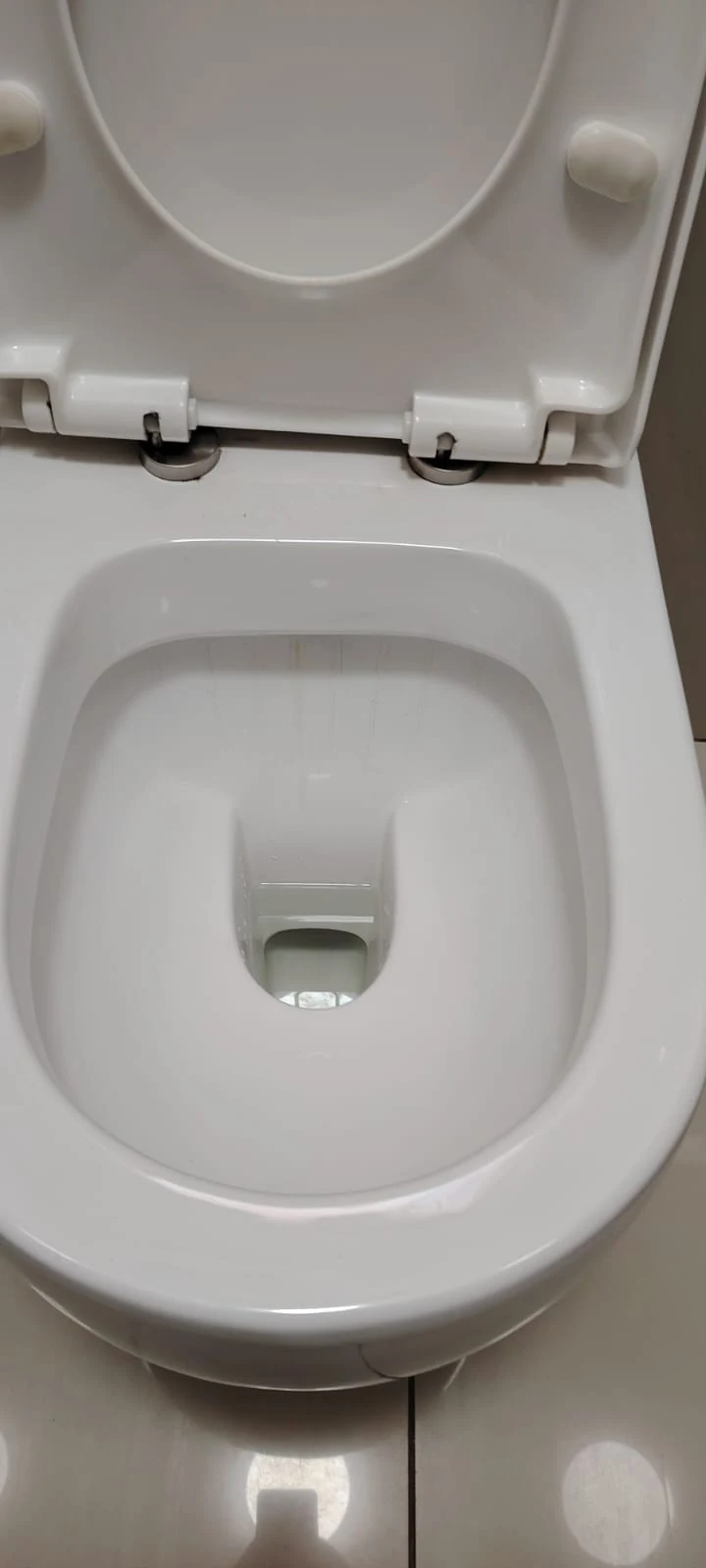
Older toilets can remain reliable for decades, but repeated cistern faults, cracks, poor flushing, hard-to-find spares and excessive water use eventually make replacement more practical than another repair. A careful assessment prevents replacing a sound toilet unnecessarily.
Before you worry
Age alone is not a reason to replace a toilet. If the ceramic is sound and compatible replacement parts are available, a cistern repair may restore reliable service. Replacement becomes more attractive when several problems occur together.
How to recognise the problem
- The pan or cistern is cracked.
- The toilet rocks despite proper refixing attempts.
- Flush parts are obsolete or repeatedly fail.
- The toilet needs multiple flushes.
- Persistent stains, scale or surface damage make cleaning difficult.
Common causes
- Ageing ceramic or internal mechanisms.
- Repeated outlet-seal or base leaks.
- Inefficient high-volume flushing.
- Bathroom renovation or accessibility needs.
- Mismatch between old pan design and modern replacement parts.
What you can safely check yourself
- Measure the existing toilet and waste outlet.
- Check wall, door and knee clearance.
- Photograph the water and waste connections.
- Compare repair history and likely replacement cost.
- Plan safe disposal of the old ceramic unit.
What you should never do
- Do not buy before confirming outlet compatibility.
- Do not attempt to carry heavy ceramic alone.
- Do not reuse damaged seals or connectors.
- Do not install over rotten or unstable flooring.
When to call a plumber
Use a plumber when the outlet position must change, floor damage is present, a concealed system is involved, or correct sealing and stable fixing cannot be guaranteed.
How professionals solve it
The plumber assesses compatibility, removes the old toilet without damaging connections, inspects the floor and waste pipe, installs the new unit with suitable fittings, connects the water supply and performs flush, stability and leak tests.
How to prevent it happening again
- Choose a model with available spare parts.
- Use a serviceable isolation valve.
- Address movement immediately.
- Avoid harsh cleaners that damage surfaces and seals.
- Keep installation documents and model details.
Frequently asked questions
Is it cheaper to repair or replace an old toilet?
A minor valve or seal repair is usually cheaper. Replacement becomes sensible when the ceramic is damaged, parts are obsolete or several failures occur together.
Will a new toilet fit the same outlet?
Not always. The outlet type and position must be checked against the new model before purchase.
Are modern toilets always better at flushing?
Good modern designs can use less water effectively, but correct installation and suitable drain conditions remain important.
Considering replacing an old toilet?
Send a photo of the current toilet, outlet position and available space so compatibility can be checked before installation.