
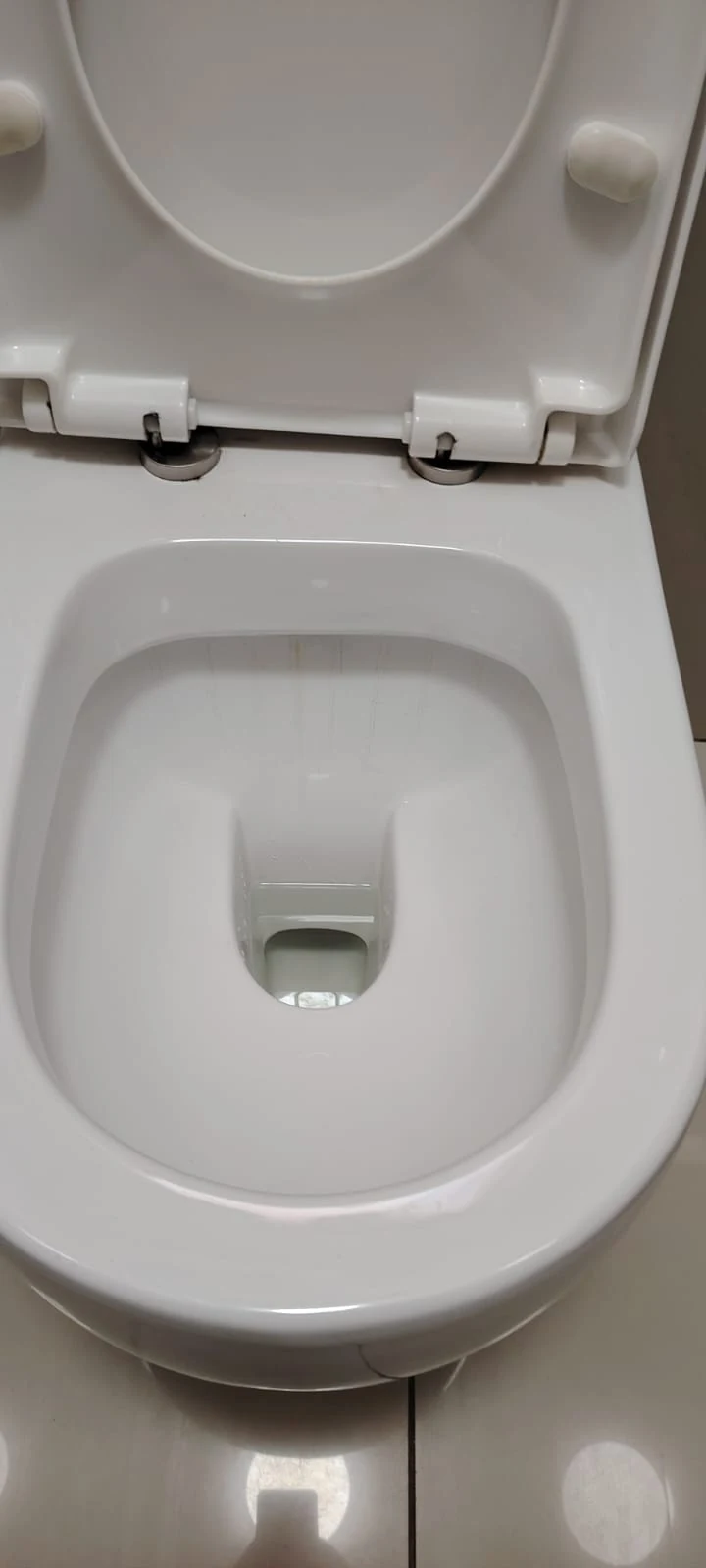
A water-saving toilet reduces the volume used per flush while still needing enough force and flow to clear the pan and carry waste through the drain. Choosing a proven design and installing it correctly is more important than selecting the lowest flush volume on the label.
Before you worry
An efficient toilet should not require repeated flushing. If a low-volume toilet regularly needs two or three flushes, the mechanism, water level, pan design or drainage conditions should be checked.
How to recognise the problem
- High household water use from older toilets.
- Large old cisterns using the same volume for every flush.
- Interest in dual-flush or reduced-volume upgrades.
- Repeated running faults increasing water loss.
- Renovation creating an opportunity to improve efficiency.
Common causes
- Older high-volume toilet designs.
- Leaking flush seals or inlet valves.
- Incorrect dual-flush adjustment.
- Poorly performing low-quality replacement mechanisms.
- Repeated flushing caused by weak performance.
What you can safely check yourself
- Check the litre-per-flush rating of proposed models.
- Choose products with locally available parts.
- Confirm outlet compatibility before purchase.
- Repair running toilets before measuring savings.
- Consider household needs and accessibility.
What you should never do
- Do not reduce cistern water below the manufacturer setting.
- Do not choose a toilet solely by the smallest advertised volume.
- Do not ignore drain condition when changing flush characteristics.
- Do not fit incompatible conversion mechanisms.
When to call a plumber
Consult a plumber when replacing the pan, converting an old cistern, altering the outlet or assessing why an efficient toilet is performing poorly.
How professionals solve it
A plumber confirms model suitability, outlet position, water connection and expected flush performance. The toilet or mechanism is installed and adjusted to specification, then tested with normal and full-flush cycles to ensure water savings do not create repeated blockages.
How to prevent it happening again
- Repair running toilets quickly.
- Keep valves and seals serviceable.
- Use reduced and full flush settings appropriately.
- Avoid flushing items the toilet was not designed to carry.
- Investigate weak flushing rather than increasing water level blindly.
Frequently asked questions
How much water does a water-saving toilet use?
It depends on the model and setting. Dual-flush toilets generally use a lower volume for liquid waste and a larger volume for solids.
Can I convert my existing toilet to dual flush?
Some cisterns accept compatible conversion mechanisms, but dimensions, button position and overflow arrangement must be checked.
Do low-flow toilets block more often?
A well-designed, correctly installed toilet should perform reliably. Poor pan design, low water level or existing drain problems can cause trouble.
Planning a water-saving toilet upgrade?
Tell us the current toilet type and share a photo of the outlet and space so a suitable efficient replacement can be assessed.