
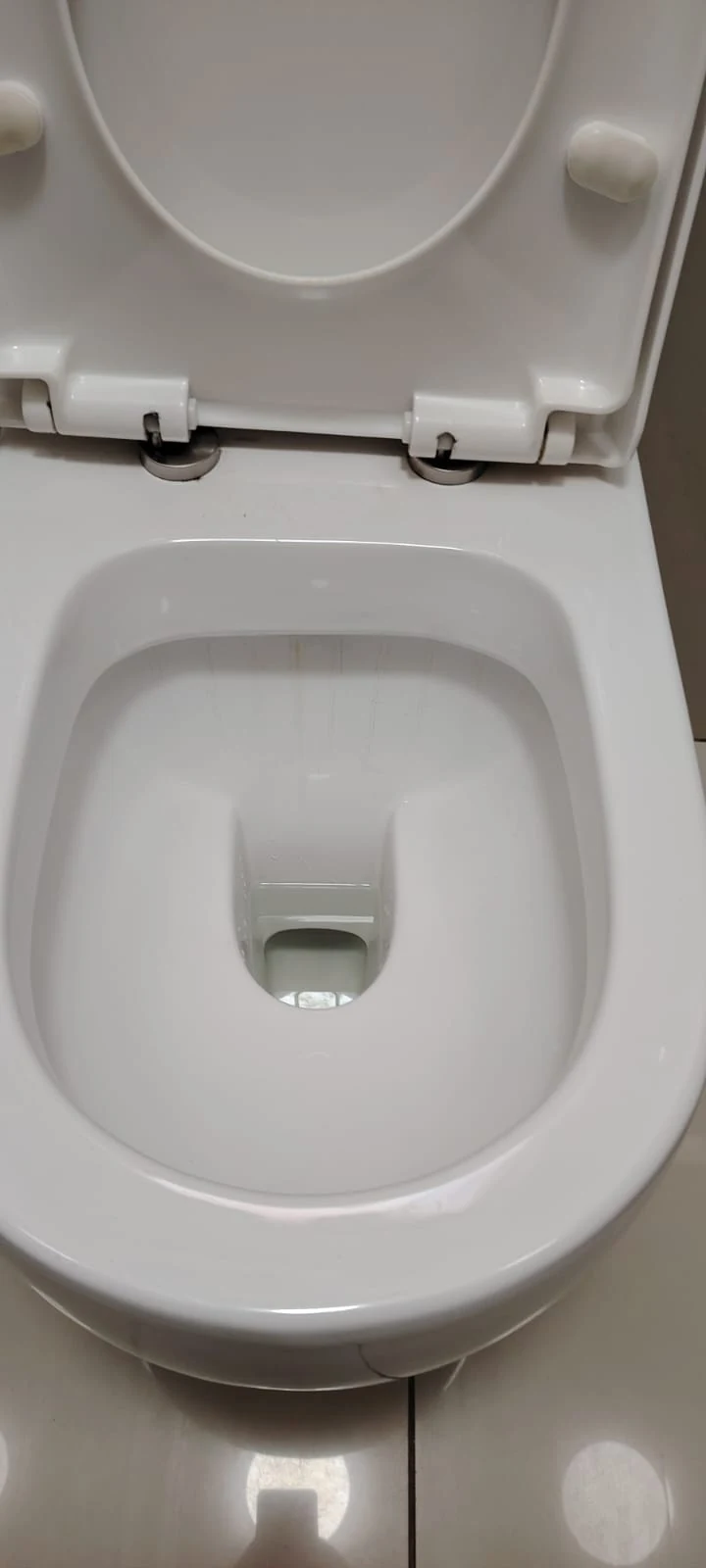
When a toilet will not flush, the problem may be inside the cistern, in the button or handle linkage, at the water supply, or in the drain. The first task is to establish whether the cistern is not releasing water or whether the pan is blocked and cannot accept the flush.
Before you worry
Do not keep operating the flush if the pan water is already high. A toilet that will not flush mechanically is different from a toilet that flushes but does not drain, and describing that difference helps prevent an overflow.
How to recognise the problem
- The button or handle moves but no water enters the pan.
- The button is loose, stuck or disconnected.
- The cistern is empty or fills very slowly.
- Water releases normally but rises in the pan.
- The toilet works only after lifting the cistern mechanism manually.
Common causes
- Disconnected or broken button linkage.
- A failed flush valve or siphon mechanism.
- Closed isolation valve or interrupted water supply.
- A sticking inlet valve leaving the cistern empty.
- A blocked toilet trap or downstream drain.
What you can safely check yourself
- Check whether other taps have water.
- Look through the cistern lid opening only if access is simple and safe.
- Confirm the toilet isolation valve has not been accidentally closed.
- Stop using the toilet if the pan level is high.
- Use another toilet until the fault is identified.
What you should never do
- Do not repeatedly flush a rising pan.
- Do not pour harsh chemicals into a toilet.
- Do not force the button or lever.
- Do not dismantle a concealed cistern without access instructions.
When to call a plumber
Call a plumber when the pan is rising, the toilet is the only available facility, the cistern mechanism is broken, the isolation valve leaks, or the fault returns after temporary adjustment.
How professionals solve it
A plumber determines whether the fault is mechanical or drainage-related. Cistern components and linkages are tested, the water supply is checked, and the toilet trap or branch drain is cleared if required. The toilet is then flushed several times to verify reliable operation and correct water level.
How to prevent it happening again
- Avoid forcing flush buttons.
- Do not flush wipes, sanitary products or foreign objects.
- Repair slow cistern filling before the mechanism stops working.
- Keep access panels for concealed cisterns unobstructed.
- Replace brittle mechanisms before complete failure.
Frequently asked questions
Can I pour a bucket of water into the toilet to flush it?
A controlled bucket flush may move waste only when the drain is clear. Do not try it if the pan is high or draining slowly because it can cause an overflow.
Why is the flush button loose?
The linkage may have disconnected or broken, or the button assembly may have shifted. The correct repair depends on the cistern design.
Does no flush always mean a blocked toilet?
No. If water is not released from the cistern, the fault is usually mechanical or related to the water supply rather than a blockage.
Need help with a toilet that won't flush?
Tell us whether the cistern releases water, whether the pan level rises and whether other fixtures are affected.